2016年7月24日星期日

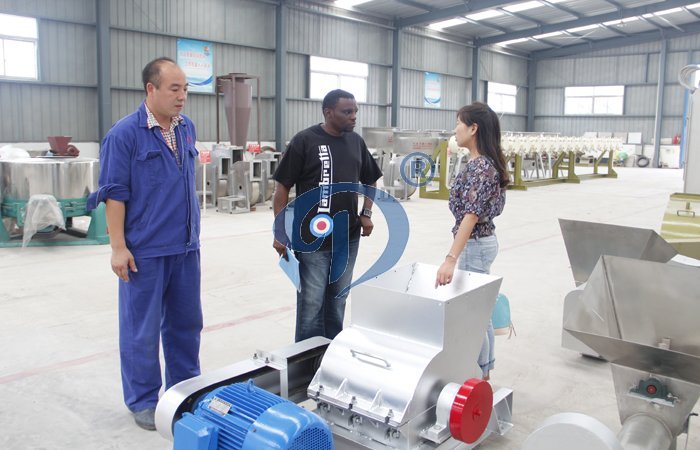
Tanzania customer visit our factory for cassava flour processing plant

Tanzania customer visit our factory

This week, there has one Tanzania customer  visit our factory for the cassava flour processing plant

Cassava is an important  food crop in Africa. World consumption of cassava for food (fresh or processed) is concentrated in the developing countries. In Africa,about 70 percent of cassava production is used as food. The most popular processed products are commonly known as cassava flour , gari, lafun, foufou, attiéké and chickwangue Gari, a dry granular meal made from moist and fermented cassava is most commonly used in West Africa. Other forms of processed cassava consumption include a sun-dried cassava known as lafun in southwest Nigeria and sticky or heavy soup made from fermented cassava known as foufou. In other parts of Africa, cassava is commonly made into flour from dried roots or chunks of roots, and consumed as flour commonly named attiéké and chickwangue.

After we discuss with our customer, he final decide to start making cassava flour by our cassava flour processing plant . The cassava flour is also very popular food in his country and with big demand in the market.

Cassava flour processing plant  processing flow as below : 
Cassava root -- peeling -- washing -- grating -- pressing  -- Sifting -- Drying -- Milling -- packing -- Storing.
  
More Information about our company cassava flour processing plant , please contact
Phone: +86 371 56771822
Email : sales@doingmachinery.com
Website: www.cassavaprocessingplant.com
Title :
Name:
Email:*
TEL :
Country:
Inquiry *


2016年7月15日星期五

How to add value to cassava ?

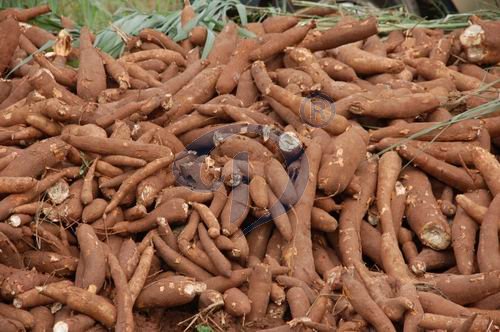
Cassava roots

Cassava roots may be harvested at any time between 6 and 18 months after planting. During food shortages, they can be harvested as needed, often one plant – or even one root – at a time. Once harvested, cassava roots are consumed directly by the farm household, fed to livestock or sold for processing into a wide array of value-added products such as cassava starch , cassava flour, garri, sweeteners or fuel ethanol.  However, harvested roots deteriorate rapidly and processing must begin within 48 hours.

Food for direct consumption

Cassava roots are washed and peeled before being boiled, steamed or roasted. In West Africa, grated roots are fermented, then roasted to produce a granulated flour called gari, or sun-dried, milled and mixed with water to make a stiff dough called fufu. In Indonesia, thinly sliced roots are fried, covered with spices and sold in local markets.

High quality cassava flour (or HQCF) is not fermented and can be used as substitute for wheat flour in bread and confectionary. Native starch extracted from the roots is used in many food products. Starch extraction can be done at almost any scale – in backyard artisanal production units and in large-scale fully mechanized factories. Many artisanal starch production units operate in Cambodia, India, Indonesia and Viet Nam, with daily output of 60 kg per worker. Semi-mechanized processing can yield up to 10 tonnes a day.

Industrial uses

Cassava starch is produced, mainly in Asia, for use as feedstock for production of sweeteners, fructose, alcohol and monosodium glutamate, and in plywood, paper and textiles. In modern starch extraction plants, daily output is as high as 300 tonnes.

Increasingly, cassava is also being used for production of fuel ethanol; in 2012, China produced 780 million litres of bio-ethanol from 6 million tonnes of dried cassava.

Our company supply the complete cassava processing machine to produce new product from cassava to add the value of the cassava .

More Information about our  cassava processing machine , please contact
Phone: +86 371 56771822
Email : sales@doingmachinery.com

Website: www.cassavaprocessingplant.com

Title :
Name:
Email:*
TEL :
Country:
Inquiry *


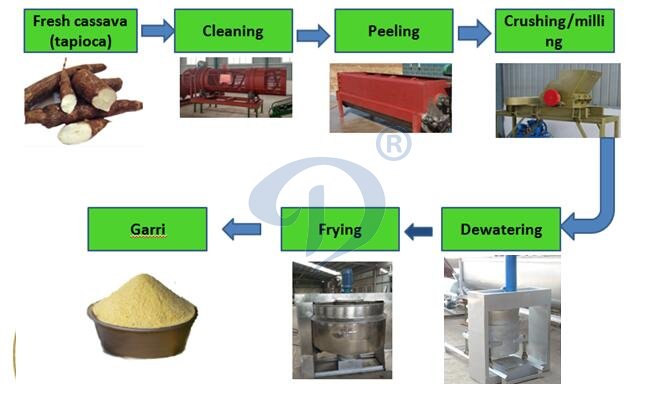
What is the gari production process ?

Gari production process


Gari is dry, crispy, creamy-white and granular. It is estimated that 70% of the cassava produced in Nigeria is processed into gari. As a result, gari is the most commonly traded cassava product. The gari prices, therefore, are a reliable indication of the demand and supply of cassava. Other relevant processed cassava foods in the traditional (food) market include fufu, lafun and abacha .

In Nigeria, mechanized cassava processing is still on the developmental stage and the potential is very high.

GARI PRODUCTION PROCESS

The basic processes involved in the production of Garri from cassava are:

1. Sorting: After harvest, some roots may be damaged or rotten. These are sorted to select the wholesome roots for processing; only healthy roots (without rot or other damage) should be processed.

2. Peeling and washing: Freshly harvested cassava roots are covered with soil and dirt and. The roots are peeled to remove the outer brown skin and inner thick cream layer and washed to remove stains and dirt. The water source should be checked regularly to ensure it is not dirty or contaminated.

3. Grating: As part of the process to remove the cyanide and make the root safe to eat, the peeled cassava are grated into a mash or pulp.  Mechanized graters are needed to produce a sufficient quantity of cassava mash to meet market demands and standards.

4. De- watering and fermenting: This completes the process of removing cyanide from the cassava mash. The water content in the mash is reduced using hydraulic press. The bags are then left to drain and ferment for a few days.

5. Granulating:  The cake is mechanically reduced in size to produce fine granules of greater surface area – known as grits.

6. Roasting: The grits are then roasted or fryed in a hot frying tray or pan to form the final dry and crispy product. Gari is normally white or cream, but will be yellow when made from yellow cassava roots or when fried with palm oil. It is important to make sure the taste and smell is acceptable to local consumers. Yellow cassava roots and palm oil are rich in vitamin A and therefore make nutritious gari. The roasted gari are spread on a raised platform in the open air to cool and dry.

7. Sieving: The Gari is sieved to separate coarse particles, with a standard size sieve to produce fine granules. A grinder is used to break the large granules into smaller ones. The

8. Packaging: The gari are weighed and then packed for marketing.

Our company supply the cpmplete set garri processing machine. If you interested in our garri processing machine , please contact us freely .

More Information about our garri processing machinery , please contact
Phone: +86 371 56771822
Email : sales@doingmachinery.com

Website: www.cassavaprocessingplant.com


Title :
Name:
Email:*
TEL :
Country:
Inquiry *


2016年6月18日星期六

Growing demand sparks cassava to extract starch

cassava starch processing
Processing cassava into cassava starch

Around 200 million poor farmers in developing countries around the world rely on root and tuber crops  for food security and income. These crops – such as cassava, potatoes, sweet potatoes and yams – are excellent sources of energy, and some are rich in vitamins and minerals.Cassava is the most important of these for a number of reasons.

Farmers cultivate cassava on their small plots of land because they do not have to spend a lot of time looking after it. It can grow in marginal upland conditions and tolerates stress, drought, heat and poor soil, which is especially important as farmers adapt to the impacts of climate change. Farmers can grow cassava alongside other crops to spread their risk, and because the market is diverse, it can bring improved incomes to put food on the table when other crops might not survive.

In today's fast-changing world, rapid economic growth must be balanced with environmental sustainability. Add to this the challenge of climate change – more extreme, more variable weather events – and population increases. Our challenge is to produce more food with fewer resources. Roots and tubers like cassava are relatively well-placed to deal with these challenges – if they are managed properly.

In West Africa, there are signs of growing interest in using locally-made cassava starch as an import substitute. Cassava starch start-ups have recently been established in Uganda, Tanzania, and Madagascar, while in Malawi industries have shown interest in buying local cassava starch for use in paper, cardboard, sweets and food processing. Meanwhile, the region’s leading cassava producer, Nigeria, has recently announced an ambitious programme aimed at producing ethanol biofuel from cassava.

“Market opportunities for native cassava starch,” says NeBambi Lutaladio, “exist to some extent in all tropical countries with a degree of industrialization. However, potential entrants to this market will only succeed if they have sufficient capital to back the venture, and can deliver reliable supplies of starch that meet the users’ specifications at a competitive price.”

With world cassava root production now standing at some 200 million tonnes a year, FAO says many developing countries could strengthen their rural economies – and boost cassava farmers’ incomes – by converting more of that relatively low-cost raw material into high-value starches. “Cassava makes a really excellent starch,” says Danilo Mejía, an agricultural engineer with FAO’s Agricultural Support Systems Division, who is coordinating the preparation of a new manual on cassava starch extraction for developing countries. “Compared to starches derived from most other plants, it has greater clarity and viscosity, and it’s very stable in acidic food products. It also has excellent properties for use in non-food products, such as pharmaceuticals and thermobioplastics.”

Our company can supply the complete cassava starch processing machine . While semi-mechanized processing can yield up to 10 tonnes a day, the modern fully mechanized cassava starch extraction plants, daily output is as high as 200 tonnes.

More Information about our cassava processing machinery , please contact
Phone: +86 371 56771822
Email : sales@doingmachinery.com
Website: www.cassavaprocessingplant.com
Title :
Name:
Email:*
TEL :
Country:
Inquiry *


How to add value to cassava ?

cassava starch processing
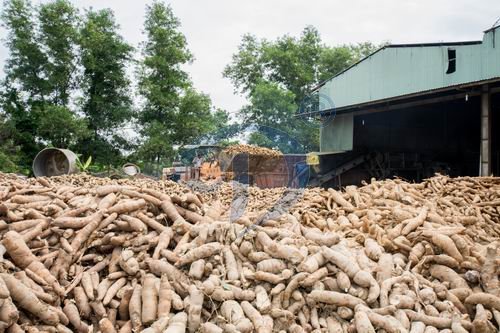
Cassava roots

Cassava roots may be harvested at any time between 6 and 18 months after planting. During food shortages, they can be harvested as needed, often one plant – or even one root – at a time. Once harvested, cassava roots are consumed directly by the farm household, fed to livestock or sold for processing into a wide array of value-added products such as cassava starch , cassava flour, garri, sweeteners or fuel ethanol.  However, harvested roots deteriorate rapidly and processing must begin within 48 hours.

Food for direct consumption

Cassava roots are washed and peeled before being boiled, steamed or roasted. In West Africa, grated roots are fermented, then roasted to produce a granulated flour called gari, or sun-dried, milled and mixed with water to make a stiff dough called fufu.

High quality cassava flour (or HQCF) is not fermented and can be used as substitute for wheat flour in bread and confectionary. Native starch extracted from the roots is used in many food products. Starch extraction can be done at almost any scale – in backyard artisanal production units and in large-scale fully mechanized factories. Many artisanal starch production units operate in Cambodia, India, Indonesia and Viet Nam, with daily output of 60 kg per worker. Semi-mechanized processing can yield up to 10 tonnes a day.

Industrial uses

Cassava starch is produced, mainly in Asia, for use as feedstock for production of sweeteners, fructose, alcohol and monosodium glutamate, and in plywood, paper and textiles. In modern starch extraction plants, daily output is as high as 300 tonnes.

Increasingly, cassava is also being used for production of fuel ethanol; in 2012, China produced 780 million litres of bio-ethanol from 6 million tonnes of dried cassava.

Our company supply the complete cassava processing machine to produce new product from cassava to add the value of the cassava .

More Information about our cassava processing machine, please contact
Phone: +86 371 56771822
Email : sales@doingmachinery.com
Website: www.cassavaprocessingplant.com

Title :
Name:
Email:*
TEL :
Country:
Inquiry *


2016年6月4日星期六

Importance and benefits of cassava

cassava processing
Cassava roots


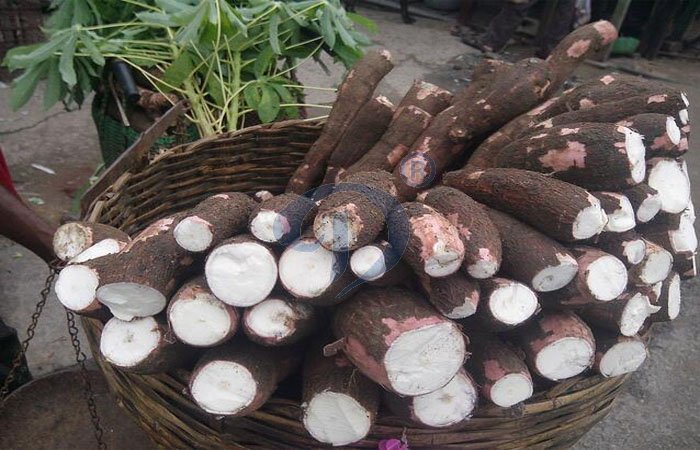
Cassava is not fully utilized in Eastern Africa compared to West Africa (such as Nigeria, Ghana).

Cassava can earn you extra income, provide employment opportunities and serve as a reserve food in times of scarcity.

Cassava is drought tolerant, easy to grow and simple to harvest. All parts of the cassava plant are valuable. Cassava leaves can be used to make soup or as feed for livestock, the stems can be used for planting more cassava, for mushroom production or as firewood, the root can be cooked and eaten fresh or processed into flour.

Cassava can also meet industrial needs such as the production of bio-fuel and starch for use in paper- and drug-making industries.

High-quality cassava flour is made within a day of harvesting the root. It is very white, has low fat content, is not sour like traditional, fermented cassava flour, does not give a bad smell or taste to food products and can mix very well with wheat flour for use in bread or cakes.

Our company supply the complete set cassava processing machine for making cassava starch , cassava flour or garri from fresh cassava roots.
If you want to get  benefits of cassava , need the cassava processing machine ,please contact us freely:
Phone: +86 371 56771822
Email : sales@doingmachinery.com
Website: www.cassavaprocessingplant.com

Title :
Name:
Email:*
TEL :
Country:
Inquiry *


Cassava starch production process

cassava starch production
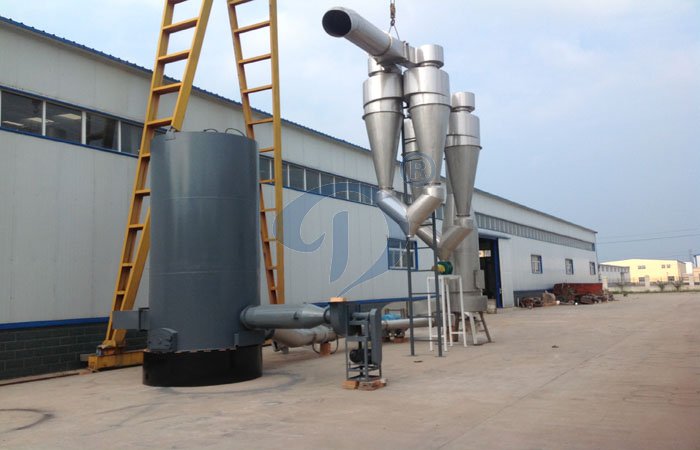
Cassava starch production drying machine

The separation of the starch granules from the tuber in as pure a form as possible is essential in the manufacture of cassava flour. The granules are locked in cells together with all the other constituents of the protoplasm (proteins, soluble carbohydrates, fats and so on), which can only be removed by a purification process in the watery phase. 
The cassava starch production process can be divided into the following stages:
1. Preparation and extraction. Crushing of the cells and separation of the granules from other insoluble matter (i.e.' adhering dirt and cell-wall material) including the preparatory operations of washing and peeling the roots, rasping them and straining the pulp with the addition of water.
2. Purification. Substitution of pure water for the aqueous solution surrounding the starch granules in the mash obtained in the first stage, as well as the operations of sedimentation and the washing of the starch in tanks and on flour tables, silting, centrifuging, etc.
3. Removal of water by centrifuging and drying.
4. Finishing. Grinding, bolting and other finishing operations.
This method of cassava starch production process is essential in the preparation of any kind of starch. For cassava, however, because of the relatively small amount of secondary substances, the separation at each stage is performed with great ease. Whereas with maize and other cereals the grinding of the seed and the mechanical separation of the germ and the pericardia from the grain present special problems in stage 1, and the separation of protein and other constituents in stage 2 can only be accomplished with the aid of chemicals, these operations can be reduced to a minimum in cassava preparation. It is indeed possible to obtain a first-rate flour from the cassava root without special equipment by using only pure water. This makes the processing of cassava flour particularly suitable for rural industries.
More information about our cassava starch production machine, please contact
Phone: +86 371 56771822 
Email : sales@doingmachinery.com 
Website: www.cassavaprocessingplant.com

Title :
Name:
Email:*
TEL :
Country:
Inquiry *